Posts

Showing posts with the label Display Specs

WWDC 2025 iOS 26: Apple Intelligence Goes Fully On‑Device — Key Features & What They Mean

Image
Why iOS 26’s On‑Device Apple Intelligence Is the Talk of WWDC 2025 Did you catch the WWDC 2025 keynote today? Apple just unveiled iOS 26 with a suite of on‑device AI features under the banner of Apple Intelligence . According to Tom’s Guide’s live coverage , highlights included a fluid “Liquid Glass” interface, a new Image Playground tool that transforms doodles into art instantly, and Genmoji, which generates personalized emojis from your selfies. If you’ve ever waited for cloud processing or worried about your data leaving your device, you’re going to appreciate these fully offline capabilities. 1. What Makes On‑Device AI Different? Unlike cloud‑based assistants, on‑device AI runs directly on your iPhone’s A19 Bionic Neural Engine. That means: Instant Responses: Features like Live Translate in AirPods Pro process speech in under 50 ms—no network lag, as demonstrated by CNET’s keynote recap . Privacy First: Apple’s support documentation confirms that Siri dictation an...
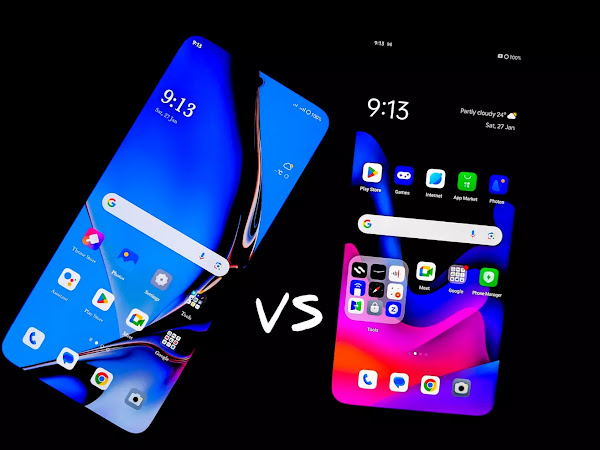
OLED vs. AMOLED: What’s the Difference in 2025?

Image
Complete OLED vs AMOLED 2025 Comparison: Power Efficiency, Picture Quality, and Durability Explained Who This Is For: Mobile gamers, content creators, and anyone choosing between OLED and AMOLED smartphone displays in mid‑2025. Why Read This: We break down the latest OLED and AMOLED technologies—comparing energy consumption, color accuracy, burn‑in risk, and cost—so you can make the smartest purchase decision. By [Sujan_Chowdhury] 1. What Are OLED and AMOLED? Plain‑English Definitions In 2025, both OLED (Organic Light‑Emitting Diode) and AMOLED (Active Matrix OLED) remain dominant in smartphone screens. At its core, OLED uses organic compounds that emit light when current passes through. AMOLED adds a thin‑film transistor (TFT) array—an active matrix—that controls each pixel individually for faster refresh rates and better energy management. 1 2. Technical Distinctions and Panel Structure Here’s how they differ under the hood: Backplane & Control: ...

Understanding Smartphone Refresh Rates: From 60 Hz to 144 Hz

Image
Complete Smartphone Refresh Rate Guide: 60 Hz vs 90 Hz vs 120 Hz vs 144 Hz for Gaming, Scrolling, and Battery Life By Sujan Chowdhury Smartphone refresh rate —measured in hertz (Hz)—dictates how many times per second the screen updates its content. While 60 Hz was the norm for years, modern devices now offer 90 Hz, 120 Hz, and even 144 Hz panels. In this guide, we’ll explain in practical terms how higher refresh rates impact gaming performance, smooth scrolling, and overall battery life on your mobile device. 1. What Exactly Is Refresh Rate? Put simply, the refresh rate measures how many times per second your screen redraws its image. A 60 Hz display refreshes 60 times per second; a 120 Hz screen does so 120 times. The result is noticeably smoother animations and faster visual feedback, especially in high‑frame‑rate games. Official specifications from leading manufacturers—such as Samsung specs —define industry‑standards, but here’s what you need to know: 60 Hz: Tra...